Series: Westerners in India
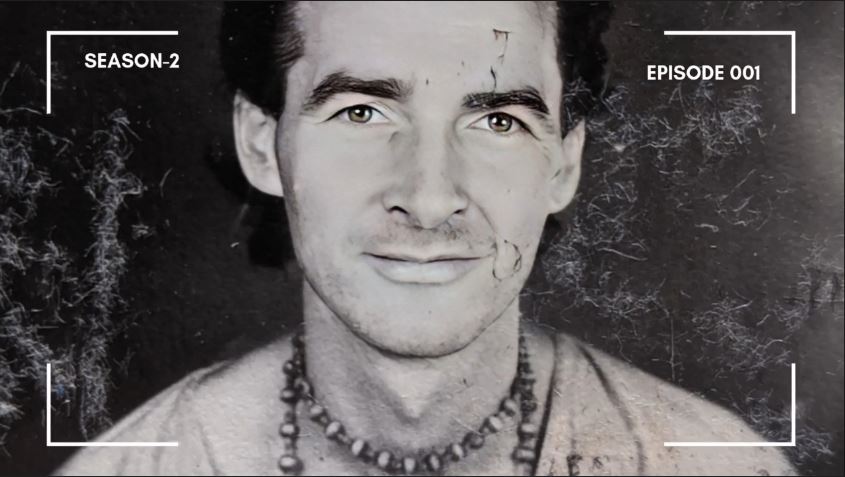
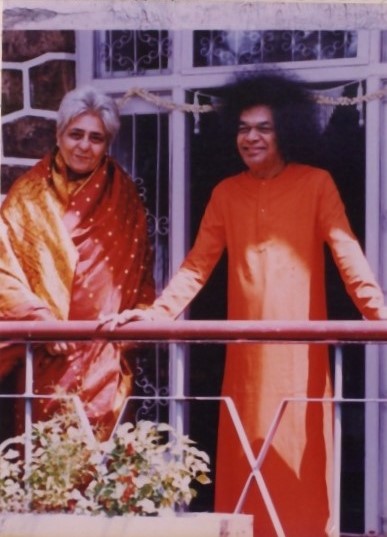
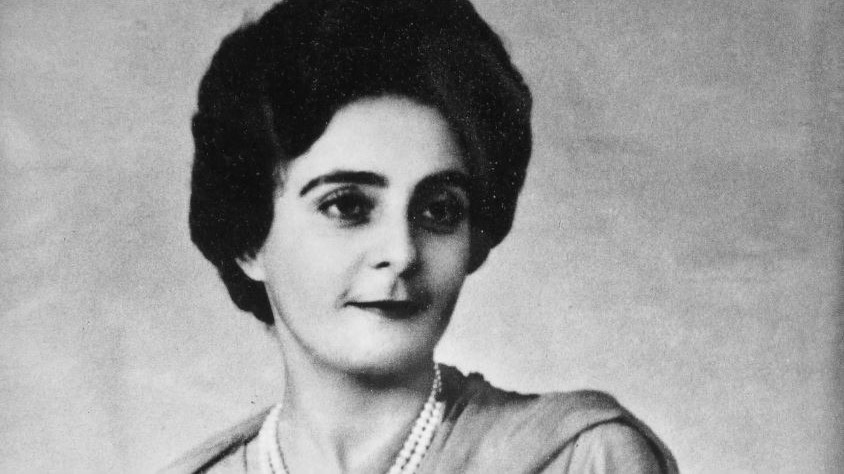
Scot Bill Aitken at his partner’s (The Maharani Prithwi Bir Kaur of Jind – The Phulkian Dynasty) Delhi house in 1972
“I’m a traveller who writes not a writer who travels.” – Bill Aitken.
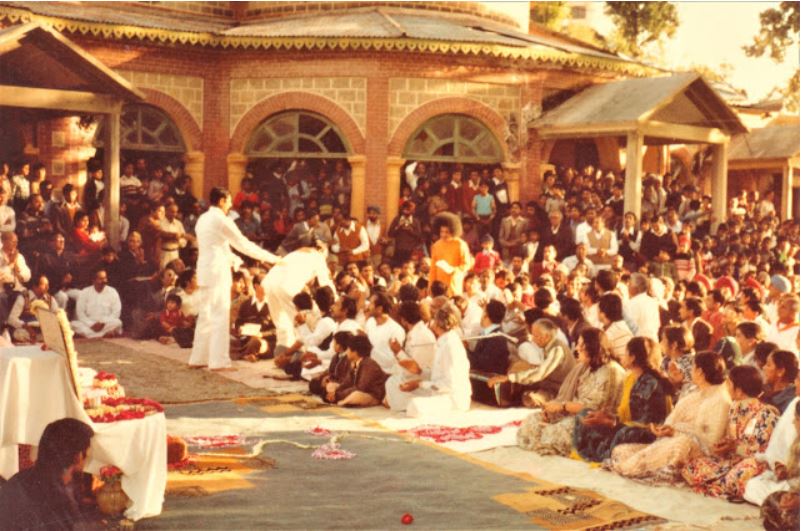
Author and travel writer Bill Aitken (William McKay Aitken) spent seven ascetic years at the Mirtola Ashram, founded by Sri Yashoda Ma, a housewife turned ascetic in 1929. At the ashram, he met and fell in love with the Maharani Prithwi Bir Kaur of Jind. The Mirtola teaching was, “Love is the guide” and this love brought an end to his restlessness and wanderlust. Aitken found a home in Oakless, her private residence in Mussoorie’s Bala Hissar neighbourhood. Their guru Sri Krishna Prem told Aitken that Prithwi could teach him more than he could. The Maharani was also a devotee of Sri Sathya Sai Baba. In 1982, Sai Baba spent two nights as her guest in Oakless. The Maharani eventually became Aitken’s guru. The most extraordinary thing about their 38-year relationship was how quickly the time passed. He was able to take her to the ‘off the beaten track’ places where royals were unaccustomed, they trekked to all the holy sites of Uttarakhand twice and on separate trips twice to Sri Hemkund Sahib and to the Valley of the Flowers. The Maharani died in 2010. Aitken is also the author of Sri Sathya Sai Baba. A Life (2004).
The Scottish-born Bill Aitken was drawn from Britain to India over many years ago, at first to research for his MA degree on Gandhi, and subsequently to settle for life and become naturalised. His future partner’s husband, the Maharaja of Jind, died the day Bill Aitken entered India on September 7, 1959. Fate and destiny were already working in the peculiar ways that bring the unlikeliest of individuals together. A spiritual lady, educated in London, she had walked out of her estate because of property feuds in 1960 and came to the ashram in 1968. “That was when I met her for the first time. It was a meeting of the East and West,” says Aitken. He experienced twelve years of the rigours of real ashram life before abandoning that path and settling down as the partner of the Maharani, a devotee of Sathya Sai Baba. He is the highly considered author of a dozen books on travel and spirituality in India.
The Tribune, DEHRADUN PLUS, Tuesday April 26 2011, Chandigarh, India. Mussoorie mourns for Sathya Sai Baba
Our Correspondent Mussoorie, April 25.
The residents of Mussoorie joined thousands of devotees in India and abroad in expressing grief at the death of spiritual leader Sathya Sai Baba on Sunday. The Mussoorie Municipal Council president, OP Uniyal, said in his condolence message that it was sad to hear of the demise of a pious saint, Sathya Sai Baba.
He was an enlightened soul and inspiration to many. Mussoorie MLA Jot Singh Gunsola, in his message, said that he had the honour of seeking Sathya Sai Baba’s blessings and meeting him during his visit to Mussoorie. He would be remembered for his noble deeds forever, added Jot Singh Gunsola.
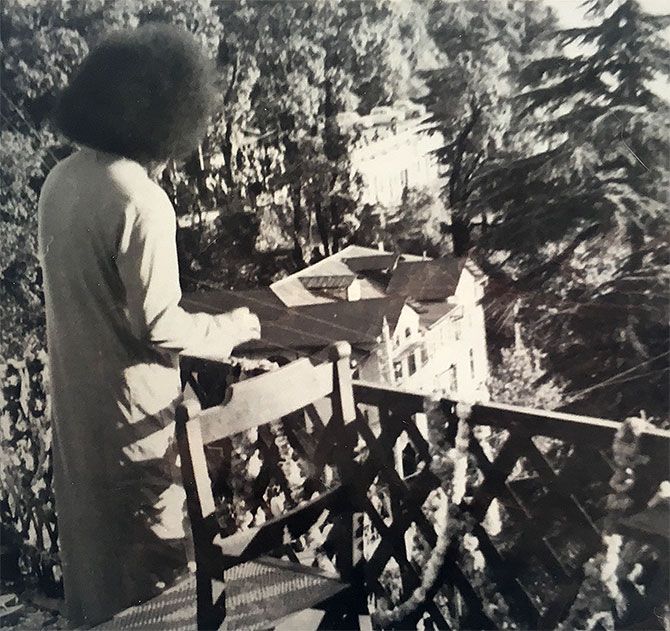
A local historian, Gopal Bhardwaj, reminisced about the visit of Sathya Sai Baba to Mussoorie in 1984. He recalled that Sathya Sai Baba had come to Mussoorie on an invitation from an ardent devotee, Prithvi Bir Kaur, the widowed former Maharani of the erstwhile Sikh princely state of Jind, who used to reside at a house called “Antlers” near Wynberg Allen School. Bhardwaj further said that devotees from far and wide came for a glimpse of their revered spiritual guru and Mussoorie turned into a holy town. Maharani of Jind turned into an ardent devotee after her mother who was a cancer patient was miraculously cured after she sought Baba’s blessing in 1966. Bill Aitken, the Scottish-born naturalised Indian and long-time companion of the Maharani of Jind, introduced him to Baba at Mussoorie. Aitken went on to write a book on Baba titled “Shri Satya Sai Baba: A life”. Bhardwaj is of the view that Sathya Sai Baba’s death has left a vaccum but his teachings will continue to enlighten the devotees and fill the void created after his death.
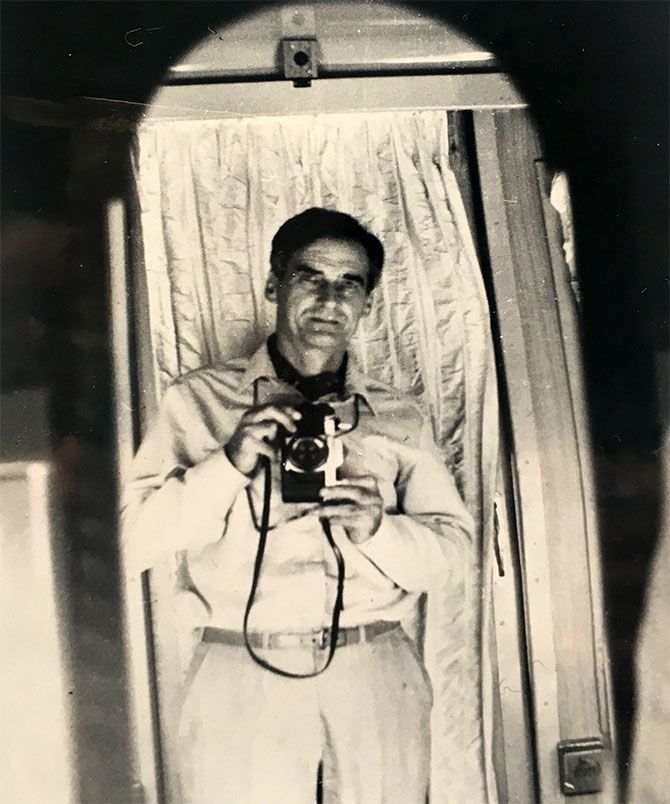
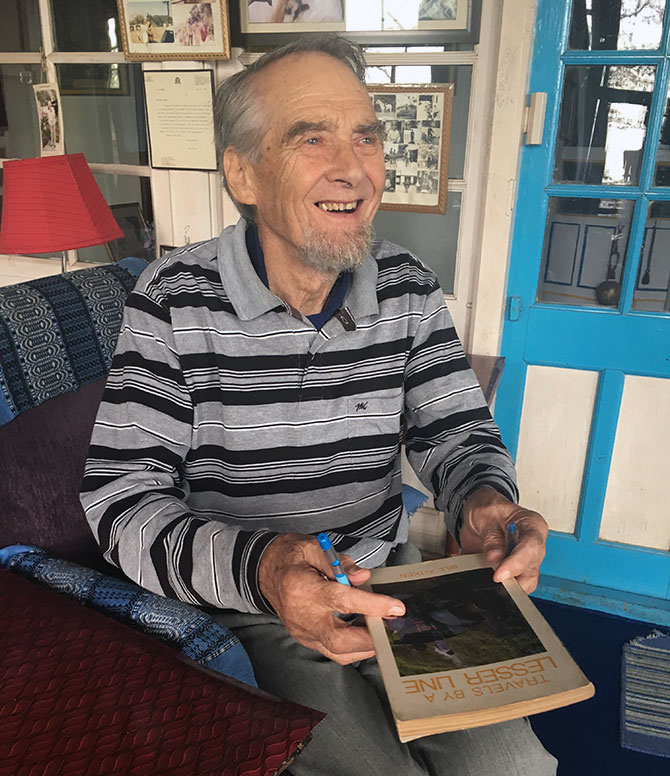
Truth be told, this is one of those interviews where I got more answers than I expected. As usual I learned a lot and am even more in awe of my guest William McKay Aitken (better known as Bill Aitken). He is a dear friend and hillside neighbor who I have long admired for his sense of adventure, his travel writing, his wit, and take on life. Bill was born in Scotland, hitchhiked to India across Europe in the 1950s and stayed onto become a naturalized Indian citizen. Drawn by his love for Himalayan mountains and rivers and plateaus of India bill written extensively about them. He has authored over a dozen books including The Nanda Devi Affair and Seven Sacred Rivers.
The Scotsman who knows India better than many of us By Archana Masih (2017).
“Men of the calibre of Shri Ramana Maharishi, Satya Sai Baba, Shri Aurobindo — you don’t get that level of excellence in the West.”
“The quality of Indian saints is unmatched.”
Bill Aitken came to India nearly 60 years ago. He never returned.
An Indian citizen since 1972, he speaks to Rediff.com’s Archana Masih about finding a religion, a country and discovering India on steam engines and motorbikes.
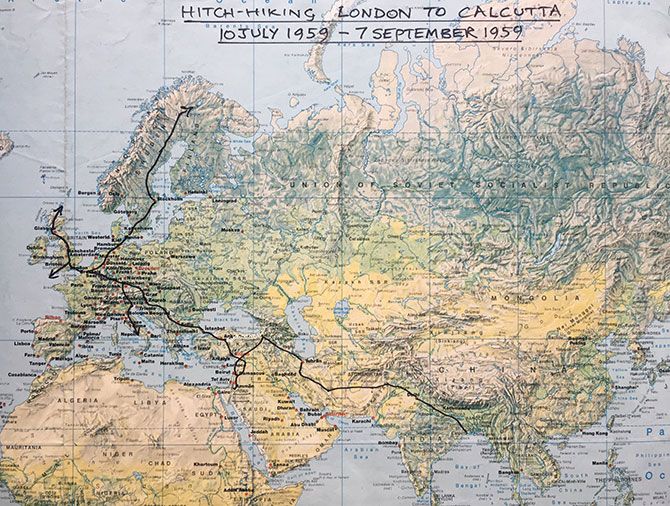
At 25, he set out over land, from England to India with 50 pounds (around Rs 1,000 in today’s time). Six weeks later, on September 7, 1959, he arrived in India, crossing over from Pakistan through Wagah after hitching a ride for Rs 2 with a group of British tourists he had met in the Kwality restaurant in Lahore.
“The funny thing was I happened to be born a vegetarian. At Christmas dinner, I would have a boiled egg!” says Bill Aitken, 83, with a generous laugh and a youthful, age-defying manner of speaking.
He gave up his British passport and became an Indian citizen in 1972. The procedure included placing an advertisement in Hindi in the local newspaper Almora Shakti.
“I had always gravitated towards Hindustani values. I studied the world’s living religions at the University of Leeds and had planned to go around the world to see Buddhism, Hinduism… I was young, I was free… I thought it is now or never.”
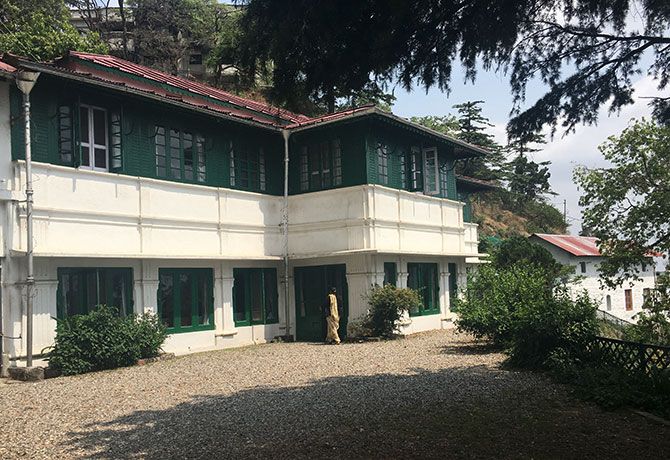
He is sitting in a chair under an assortment of framed pictures on the wall, recuperating from knee surgery. It is comfortably warm in the 100-year-old cottage in Mussoorie where every article seems of vintage.
Among the photographs is a picture of his companion of 40 years, the late former Maharani of Jind and another one of his guru Shri Krishna Prem. A World War I fighter pilot, Shri Krishna Prem, an Englishman, had a degree in philosophy from Cambridge. He came to teach at Lucknow university in the 1920s, became a sadhu and lived his life in an ashram in the Himalayas.
The easy, riveting conversation of journeys, gurus, people and life in an India of a different time is only broken by the hourly chimes of the cuckoo clock and honks of cars on the winding road outside.
Listening to him, if there is one thought that succinctly describes his experiences, it is this — ‘Wow, what a life this man has lived!’
Long before the days of Google, Aitken’s only source of information to plan the overland passage to India were a few books.
Luckily, conflict and strife had not made geographical borders and certain countries as inaccessible as they are today. Yet when has there ever been a time when the world has been at peace?
En-route he wanted to stop in Israel to see the Holy Land, but the battle for the supremacy over the Suez Canal had made it impossible to travel through the Arab countries. “You could only sail to Jaffa through Syria or Jordan, but because of the Suez war the British government said you can’t get a visa to Syria.” A friend who had already done the trip to Israel told him to ignore the advisory. “He told me to just apply for a Syrian visa when I got to Turkey. ‘If you have the cash, you will get the visa’, he said and that was enough to set me off visa-less for Ankara,” he says in a conversation liberally sprinkled with chuckles as he digs out gem after another. He finally did get the visa.
Among the cluster of photographs in the room where Aitken, a master raconteur, is recounting his adventure, is a scrapbook with a map showing the route of the journey, highlighted in black. England-Belgium-Luxemburg-Germany-Austria-Croatia-Serbia-Macedonia-Greece-Turkey-Syria –Lebanon-Jordan-Israel-sail back to Turkey-Iran-Pakistan-India. He rattles off the countries with ease, its thrill still undimmed by the distance of memory. “I journeyed by road/train… in anything that got me further. When I got to Yugoslavia the cars and roads ran out. Student volunteers were building roads under Marshal Tito and there were huge posters on the highways, saying, ‘Marshal Tito loves you, please build his roads.’”
“Wonderful people, the Yugoslavs.” But the highlight of the journey came in Iran — when he was booted out of the mosque in Qom. “I had travelled with pilgrims on a bus and went in along with them, but I was physically thrown out. The Shah of Iran was still ruling then and it was used by the Ayatollah (Khomeini) as a seminary. He wasn’t there at that time,” he laughs heartily again, sipping a glass of warm water. It was a different world then — Yugoslavia had not broken up, the Shah had not lost his throne and Pakistan was under martial law.
“I made it to India, god knows how,” he chuckles, remembering that Wagah was a quiet crossing at that time without the masculine theatre that is played out between Indian and Pakistan every evening. He caught a train to Amritsar to visit the Golden Temple and then onward to Delhi where he stayed at the Birla Mandir, which was inaugurated by Mahatma Gandhi with the condition that it should be open to people of all castes. But by then he was broke. “50 pounds khatam ho gaya, even though I had survived on grapes and bread to make it last,” he laughs.
A friend in Calcutta then got him a teaching job for Marwari kids at the Hindi High School for Rs 400 a month — and Aitken set off by train to Bengal for another life-changing journey. He taught for one-and-a-half years and lived at the Salvation Army hostel for Rs 1 a day. “The only Christians that I’ve found, who actually practice what Christ was all about!” he says in good humoured jest. “if I had any money I would leave it to them. They are simple and sincere.”
Last year an old student from the school, now a CEO of a large company, sought him out and invited him for lunch.
He loved Calcutta and the people. They were so themselves — so at home in their own culture, he felt. “They gave a hoot about anyone else. Most people when they saw an angrez, they appeared polite and helpful, Bengalis just laughed at you,” he says with a laugh himself. “It was so refreshing that I was a figure of fun.”
With an MA in comparative religion, Aitken’s plan was to experience the religions of the world and return to England to teach — but the Hindi High School changed it all for him. “What turned me, having grown up in the Western education Scottish Calvinist faith, was this wonderful image of Saraswati at the entrance.” “It was mind blowing. I stayed on because of Goddess Saraswati. That really decided that India complements my thinking. The psychic — this more than the body dimension — was totally lacking in the West.” As he says this, he points to a statue of Saraswati, the Goddess of Learning, placed in a shelf opposite the chair he is sitting in. It seems to be thoughtfully placed, to be in front of his eyes at most times.
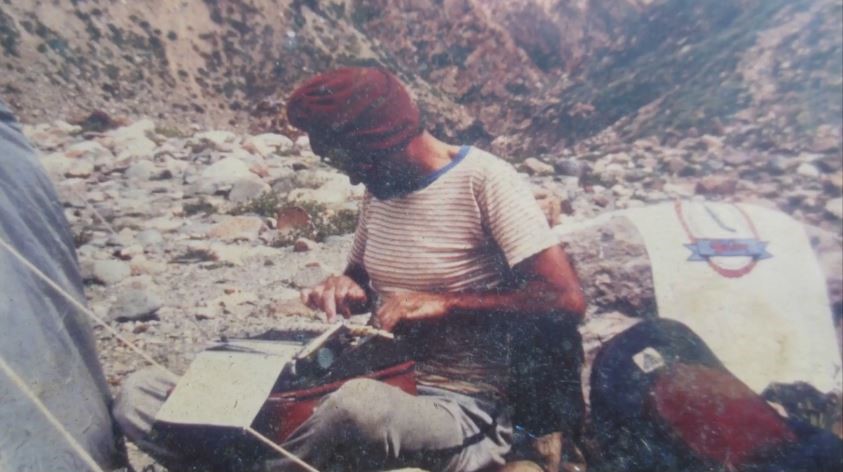
Bill Aitken has been a student of Hinduism since 1953. His scholarship has been honed by half a century’s experience of witnessing and encountering the spiritual and the divine in India. He spent 11 years in two ashrams in Uttarakhand in the 1960s, working as a gardener and labourer. An almost fatal bout of typhoid nearly took his life there, but he came out of it semi enlightened, he says. “We are not born with religion, we are born to find our religion,” says the man who has visited all the dhams (religious destinations) and harbours an innate sensitivity towards India’s mountains, forests and rivers.
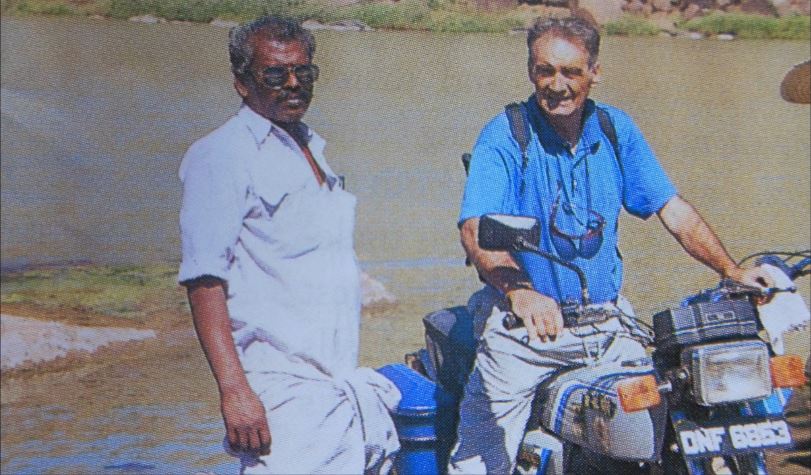
He has written over a dozen books travelling through the country on his motorbike and trains. For twelve years, every winter, he set out of Delhi on his motorbike to the Deccan and says the most beautiful mandir he has ever seen is the 13th century Ramappa temple in Telangana. “Those living, vibrant statues… I never tire of the Deccan — the temples, the legacy of the Maratha empire, the brilliant architecture of medieval Muslim sultanates in Bidar, Bijapur — fantastic!”
Historian Ramchandra Guha once said in an interview that Aitken’s book Seven Sacred Rivers is a gem of a portrait of India.
“As a child I was very dissatisfied about the nature of the divine god,” says Aitken. “Whenever I questioned my elders, the answer always was — ‘eat your bun’,” he laughs. “Only as a student, after I read these various world scriptures, immediately, the Upanishads made sense.” “India finds worship as a natural thing to do. In Shakespeare’s England there was still a psychic dimension, but with the Age of Reason in the 17th-18th century, the psychic reality — like the credence to dreams and premonition — was cut out. It all became cerebral.” “Men of the calibre of Shri Ramana Maharishi, Satya Sai Baba, Shri Aurobindo — you don’t get that level of excellence in the West. The quality of Indian saints is unmatched.”
Aitken once wore a kilt. His native village has a monument to Scottish hero William ‘Braveheart’ Wallace, the iconic martyr of Scottish independence.
His painstakingly made scrapbook — which has photographs, travel memorabilia like the first -ever tourist permit to Arunachal — has a section devoted to Tullibody, his village in the Forth Valley. It has photographs of his family, a picture of an old Scottish steam engine and his beautiful village — but Aitken has left Scotland far behind. He last visited his sisters in 1997 and does not think he will make another trip.
When he took Indian citizenship, he wrote to the British high commissioner renouncing his British citizenship — and the reply he got was — ‘you can’t!’ “I was informed that because you are born in Britain of British parents you remain British whether you like it or not,” he laughs. “So I’m Hindustani and Vilayati.” “I love India. Britain has no appeal, I like the people, but it is a strange place. I feel it is an unenlightened well meaning nation. They gave me a good education and I can never thank them enough.” Fired by that education’s encouragement to question beliefs and ideas ultimately led Aitken to India. In England, his external examiner for the MA thesis happened to be a Bengali. The professor told him that if he ever happened to visit India, he should meet Shri Krishna Prem, the English sadhu in Mirtola ashram in Almora. In the strange ways fate sometimes goes on to craft people’s lives, it was a stroke of chance that the teacher from whom Aitken was taking Sanskrit lessons in Calcutta, also knew Shri Krishna Prem. But he warned him that the guru did not like visitors and gave him a letter of introduction.
Aitken would only meet the guru a few years later, but like most of his journeys, his move from Calcutta to the Himalayas was yet another fascinating discovery of India, her people and of himself. You have to separate the concept of India as a nation State which is very young and the Upanishadic wisdom which is timeless.’
In the second part of his conversation at his home in Mussoorie, Bill Aitken speaks about spending over a decade in ashrams in the Himalayas, learning Hindi, the regard for a guru and love for a maharani — and glorious journeys that changed his life forever.
“Let’s go to Badrinath.” A teacher friend at the Hindi High School in Kolkata, where he taught, dangled the tantalising idea to Bill Aitken one day. Aitken was already looking to moving on from the school and took up the offer of his friend, a lovable eccentric. The friend was no less of a unique traveller himself — whenever an Indian state created a new district, he would go and visit it! The duo planned the trip, but as a foreigner Aitken had to write to the Government of India requesting a permit to travel to the upper reaches of the then Uttar Pradesh state. Very innocent of India of those times and unknowing that rarely anything happened without influence, he asked the babus to kindly send the permit to the Shivananda ashram in Rishikesh where they were going to stay for a few nights. With the tenuous hope of that permission letter, he set off yet again. The permit never arrived.
His Bengali friend was not one to be deterred. He said they would carry on regardless and see how far they could go before being turned back. They managed to get to Rudraprayag by waving cholera certificates to the authorities. In those days there were no motorable roads beyond that and people had to cross a single suspension bridge to get to the other side. “Jim Corbett’s man eating leopard of Rudraprayag used to case this bit,” laughs Aitken, “As we were walking, a policeman asked tum kahan se aaya hai? (Where have you come from?) I didn’t know Hindi and I was turned back.”
Aitken tells these life stories — so rich and vivid in detail — that they play out as film, but he makes it out be just a chain of ordinary events that built his life.
“Earlier, at the Kumbh Mela in Allahabad I had met some missionaries who said you would never learn anything about Hinduism unless you learn Hindi. They said the best place to learn Hindi was at the Language School in Landour.” So Aitken came straight to Landour and enrolled for a month at the school, which still remains the first port of call for foreigners wanting to learn Hindi. “I learned Devnagari and thoda bahut Hindi. At least I could read the bus signs then,” says Aitken who speaks Hindi fluently now.
A missionary at the school invited Aitken to Nainital, and he realised that this could be the opportunity to see this English guru he had heard so much about. Sri Krishna Prem’s ashram in Almora wasn’t too far and the meeting was to change his life forever. The guru, however, had some other plans. Seeing Aitken’s interest in Gandhian values, he advised him to visit Sarla Devi, a Gandhian in Kausani.
Considered one of Gandhi’s English disciples like Miraben, Sarla Devi was born in London and her original name was Catherine Mary Heilman. She did pioneering work in conserving the Himalayan forests and in the evolution of the Chipko Movement. The ashram she set up continues till today. “I liked the simple life, health, fresh air. Her ashram was in front of the Goddess Nanda Devi. I became a maali (gardener). My expenses were Rs 2 a month for postage, sabun (soap) etc.” He spent four years there, almost died of typhoid and was cured by Sarla Devi’s nature cure treatment. During his illness, he says he had an out of body experience that made him approach another level of reality. “The scales from my eyes fell off.” “From that moment I suddenly saw how life is one huge joke. We are all guaranteed to be well meaning idiots because no one questions what is told. It has nothing to do with ideologies. Most ideologies are mostly mental crap.” “The world is not yesterday or tomorrow, but only now. Every person has the capacity to find within the reason why s/he was born and the reason of life.”
After recovering from typhoid, on Sarla Devi’s advice, Aitken went to consult Krishna Prem and stayed in his ashram for the next seven years. It was a tough life. He worked the farm from 5 in the morning to 10 at night. “It was all to get you beyond the physical concept of oneself. If you died, it was fine — way to go,” laughs Aitken.
A few years into ashram life, Bill Aitken met the former Maharani of Jind. The royal would alter the course of his life. Mahrani Prithwi Kaur’s husband, the maharaja of Jind, died the day Bill Aitken entered India on September 7, 1959. Fate and destiny were already working in the peculiar ways that bring the unlikeliest of individuals together. A spiritual lady, educated in London, she had walked out of her estate because of property feuds in 1960 and came to the ashram in 1968. “That was when I met her for the first time. It was a meeting of the East and West,” says Aitken, referring to her as “Maharani” whenever he mentions her in our conversation.
The house was her private property and is stamped with her presence. Framed pictures of her rest on a piano that she once played. There are artefacts and other photographs — of her as a school girl in England, and one of Sathya Sai Baba, who stayed in the cottage for two nights in 1982. A stone memorial quietly rests in the garden. On the ground floor are hunting trophies. The cottage houses a trust for mountaineering studies which was the maharani’s desire.
Jind is divided between the present day Sangrur and Jind districts. At its height, the estate extended from Jind, Haryana to the border of Patiala in Punjab, says Aitken. It was famous for its kennels and had 300 hunting dogs.
Maharani Prithwi was married at 13 and had her first child the same year. She lost her husband; both her only sons died young and her stepson became maharaja. She was a huge devotee of several gurus all her life.
“Shri Krishna Prem was guru to both of us. He told me I could use my talent better as a private secretary to her rather than wasting it trying to become a monk,” says Aitken. He came to Delhi in 1972, where Prithwi Kaur had a house. “All her friends, the golfing set were in Delhi. She was very outgoing,” says Aitken.
He travelled every winter and they spent summers in Mussoorie. “I became a travel writer and got a slot in The Statesman, wrote a few books. Becoming a published author gave me some status in Delhi rather than being a hippy,” he says downplaying his personal achievements with a dismissive laugh.
It is time for lunch and Bill Aitken leads the way to the dining table by the window. A thali with katoris is set with dal, bhaat, bhindi, roti and dahi. Papaya, peda, gur are the dessert options.
Whenever he returned from his long journeys, he would seek dal and bhaat, he says, as Rampyari, the cook and a member of the maharani’s staff, serves him a spoonful of hot dal.
After lunch, he shows his scrapbook which is a tribute to many fabulous journeys. He has lovingly put it together, the description of photographs, clippings, tickets, permits — written by hand. It also includes a clipping of the notice in the newspaper of his application for Indian citizenship in 1972 and the first tourist permit ever given for travel to Arunachal. He speaks about his bike rides to Lahaul and Spiti in Himachal, Gangtok-Ladakh, Arunachal Pradesh, Naxalbari-Nepal, source of the Kaveri in Coorg. He is the only person to cover the length and breadth of the country by choti line trains drawn by steam engines.
In his nearly six decades in India, Bill Aitken has experienced, lived and learnt about his adopted country with the hunger of a seeker. “You have to separate the concept of India as a nation State which is very young and the Upanishadic wisdom which is timeless,” he says, “You can’t kill ideas, faith or devotion.” He came to India twelve years after it gained freedom and has seen the nation come into its own. When he arrived, life expectancy was 27, now it is 67, which is a huge achievement and the Congress — much maligned these days — can take credit for it, he says. “You can’t write them off, these people gave us freedom. India had a giant in Nehru at that time.”
For a scholar and practitioner of Hindu philosophy, I am curious to know what he thinks about the current zeal for gau raksha and aggressive nationalism. “Cow regard is very beautiful, but it is not the means to realisation. It is kindness to the whole creation. To give it priority suggests you don’t mean much about the higher levels of Hindu philosophy,” he explains. “There has been a colonial transposing of university culture, but India has its own ancient gurukul tradition. By all means fly a flag on national occasions, but don’t demean knowledge by assuming it is confined to one nation which is what a national flag connotes.” “If you want to have a flag, then have a flag to the goddess of learning (Saraswati).” India, he says, has a much superior civilisation and a brilliant religious tradition. But it must be cautious. “India has slipped 3 places in freedom of expression. It is now on the level of Zimbabwe, Pakistan — so there ought to be some reason for soul searching.”
Disregard for the environment is another thing that bothers him and he gets up to point to a tree that has dried up in front of the window. “Human beings are the planet’s greatest pests. It is people who kill trees.” Outside is a Deodar tree planted by his friend Ruskin Bond. As he walks us out, taking an afternoon walk, we pass the tree and Bill Aitken narrates another of those interesting gems from his life. This one is hilarious. “I was once invited to speak at a university. The vice chancellor gave a short speech about my writings and introduced me as Bill Clinton!” He laughs aloud.
It is an afternoon dominated by laughter, stories, journeys and India. Listening to him, I think if there is a treasure one must have it should be a scrapbook of memories like his.