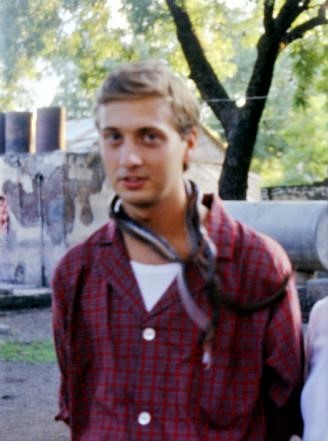
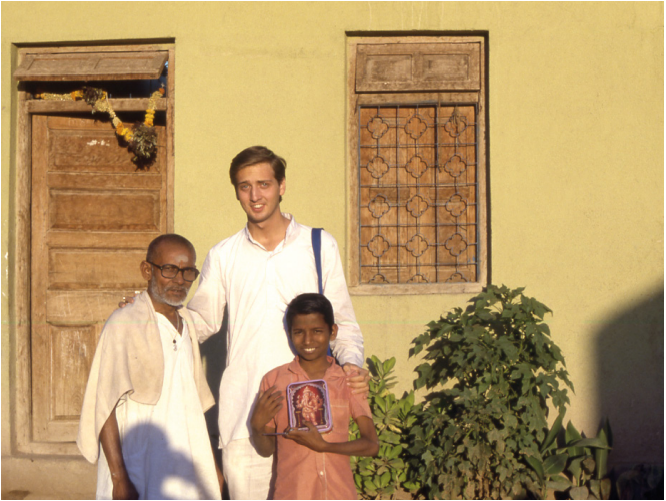
Italian author Antonio Rigopoulos arrives in Prasanthi Nilayam in November 1985.
Antonio Rigopoulos lives in Venice Italy. He is a Professor by profession in the Ca’ Foscari University of Venice teaching Sanskrit and Indian Religions and Philosophies. He did his MA and PhD in at the University of California, Santa Barbara.
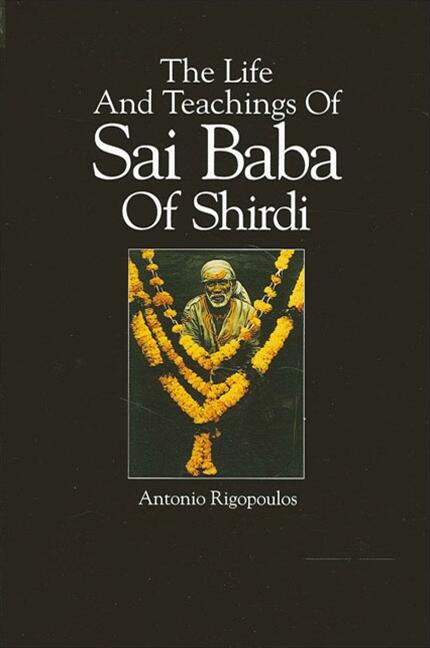
In 1985, young Italian researcher Antonio Rigopoulos conducted field research to Maharashtra and Andhra Pradesh during October and November for the preparation of his BA thesis on the life and teachings of the Indian saint Sai Baba of Shirdi (d. 1918). In Shirdi and surrounding areas, he was accompanied by a local interpreter who led me from house to house and who translated the words of the respondents from Marāṭhī into English. Published as The Life And Teachings Of Sai Baba Of Shirdi by Sri Satguru Publications in 1993. It contains oral testimonies on Sai Baba. The interviews of each day are preceded by excerpts taken from his personal diary.
While at the ashram I carried with me in a small cellophane package the eight mini-cassettes with all the interviews I had collected in Shirdi, Sakuri, Bombay, and Prasanthi Nilayam – including this one with Professor Kasturi – hoping that Bhagawan Shri Sathya Sai Baba might bless them during darshan. On Thursday afternoon of November 14, during bhajans, I was sitting in first line in front of the Mandir and it so happened that the guru came out of his room for one more darshan. He walked straight toward me and graciously blessed me and my precious envelope. On this occasion he played a līlā, i.e. a trick. He repeatedly asked me: “What is this?,” and when I replied: “Interviews with old devotees of Shirdi,” he remained silent for a few moments and slapped me on my left shoulder. Unexpectedly, he then took the package from my hand and asked: “For me?,” and while saying so he turned and started moving away. I had not anticipated that he could do this and for a second – a very long second! – my heart sank and I thought I had lost my invaluable ‘treasure.’ Terrified at the idea of losing the tapes, I loudly replied: “No, no Swami, for a blessing!” He then stepped back and, with a benign smile, returned the package to me with perfect nonchalance. It was a real lesson in detachment and a most powerful exchange which I will never forget.
https://edizionicafoscari.unive.it/media/pdf/books/978-88-6969-447-9/978-88-6969-447-9_9R4GWgW.pdf
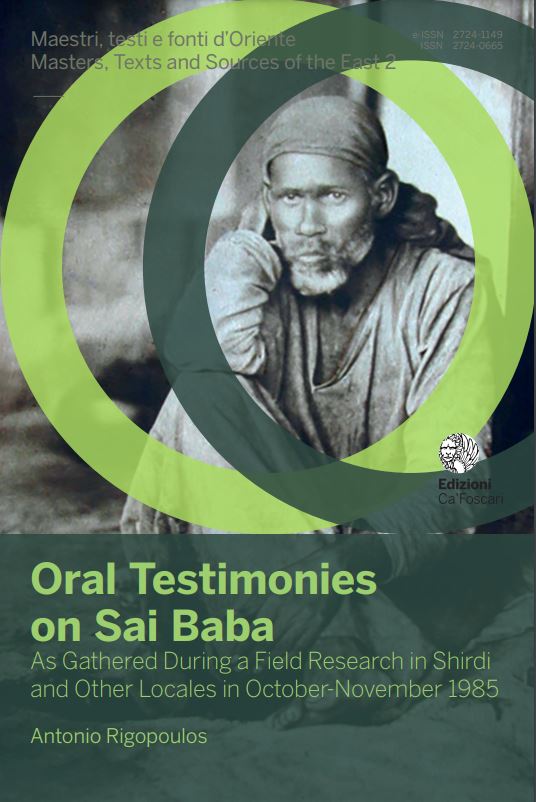
The interviews and audio recordings comprised in this volume are the outcome of a field research to Maharashtra and Andhra Pradesh which took place in October – November 1985 for the preparation of the author’s BA thesis on the life and teachings of the Indian saint Sai Baba of Shirdi (d. 1918), discussed at the Ca’ Foscari University of Venice in June 1987 (Un maestro dell’India moderna: il Sāī Bābā di Śirḍī. L’uomo, l’ambiente, gli insegnamenti). The conversations of each day are preceded by excerpts from the authorʼs diary. These testimonies record the words of various people in the village of Shirdi and other locales, among whom are the last old men who knew Sai Baba: Balaji Pilaji Gurav, Bappaji Lakshman Ratna Parke, Martanda Mhalsapati, Pandharinath Bhagavant Gonkar, Tukaram Raghujiv Borawke, and Uddhavrao Madhavrao Deshpande. While in Shirdi the author was also able to interview Uttamrao Patil, son of Tatya Kote Patil, and in Mumbai he had the privilege of meeting Swami Ram Baba, who first met the saint in 1914. Taken altogether, these conversations are primary sources for the study of Sai Baba and may help to contextualize Shirdi as a pilgrimage place in the mid-1980s.
Download: https://edizionicafoscari.unive.it/media/pdf/books/978-88-6969-447-9/978-88-6969-447-9_9R4GWgW.pdf
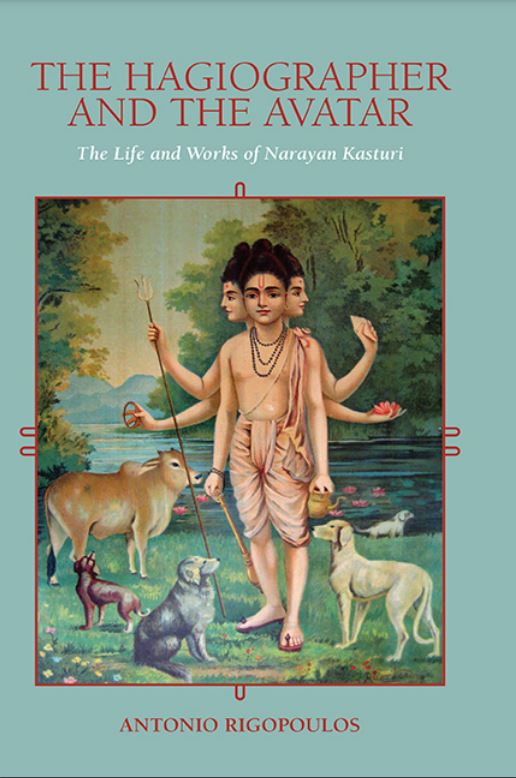
This book explores the seminal roles played by a hagiographer in the making of a charismatic religious movement: the post-sectarian, cosmopolitan community of the Indian guru Sathya Sai Baba (1926–2011), the centre of which is the ashram of Prasanthi Nilayam in Puttaparthi, in the Anantapur district of the southern state of Andhra Pradesh. The case study’s protagonist is Narayan Kasturi (1897–1987), a distinguished litterateur and the holy man’s official biographer, who first met Sathya Sai Baba in 1948 and who lived at his hermitage more or less continuously from 1954 up until his death.
My contention is that in order to deepen our understanding of this pan-Indian hero and his movement, attention must especially be focused upon Kasturi’s background, worldview, deeds, and overall aims and expectations. This is all the more necessary given the almost complete lack of research on this figure. Despite the influence exercised by the four volumes of his hagiography titled Sathyam Sivam Sundaram – venerated as a sacred text by all devotees and covering Sathya Sai Baba’s life from his birth in 1926, up to 1979 – little scholarly notice has been paid to this truly remarkable intellectual. My study is therefore intended as a biography of Narayan Kasturi, sharing heretofore unknown or little-known information. There being no English-language academic studies on Kasturi and his significance in the construction of the Sathya Sai Baba organisation, I hope that the wealth of data on him will be appreciated by both scholars and general readers.
AUDIO : Oral Testimonies on Sai Baba https://archive.org/details/Oral-Testimonies-on-Sai-Baba